I aspire to bring the wonderment, spirit and joy of nature into our interior spaces, encouraging us to pause, reflect and reconnect with the beauty of the living world around us.
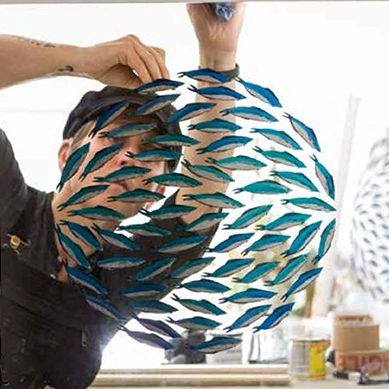
When I first began gilding I started an extraordinary journey of discovery – one that thrills and excites me, and compels me to push my own boundaries as an Artist. I love the challenge of working in reverse and the complexity of working on glass…. Some of the processes I use to achieve my finishes are age old techniques, and many are born from continuous experimentation in the studio. By combining my background as an illustrator with Verre – eglomise i have created my own distinctive style…
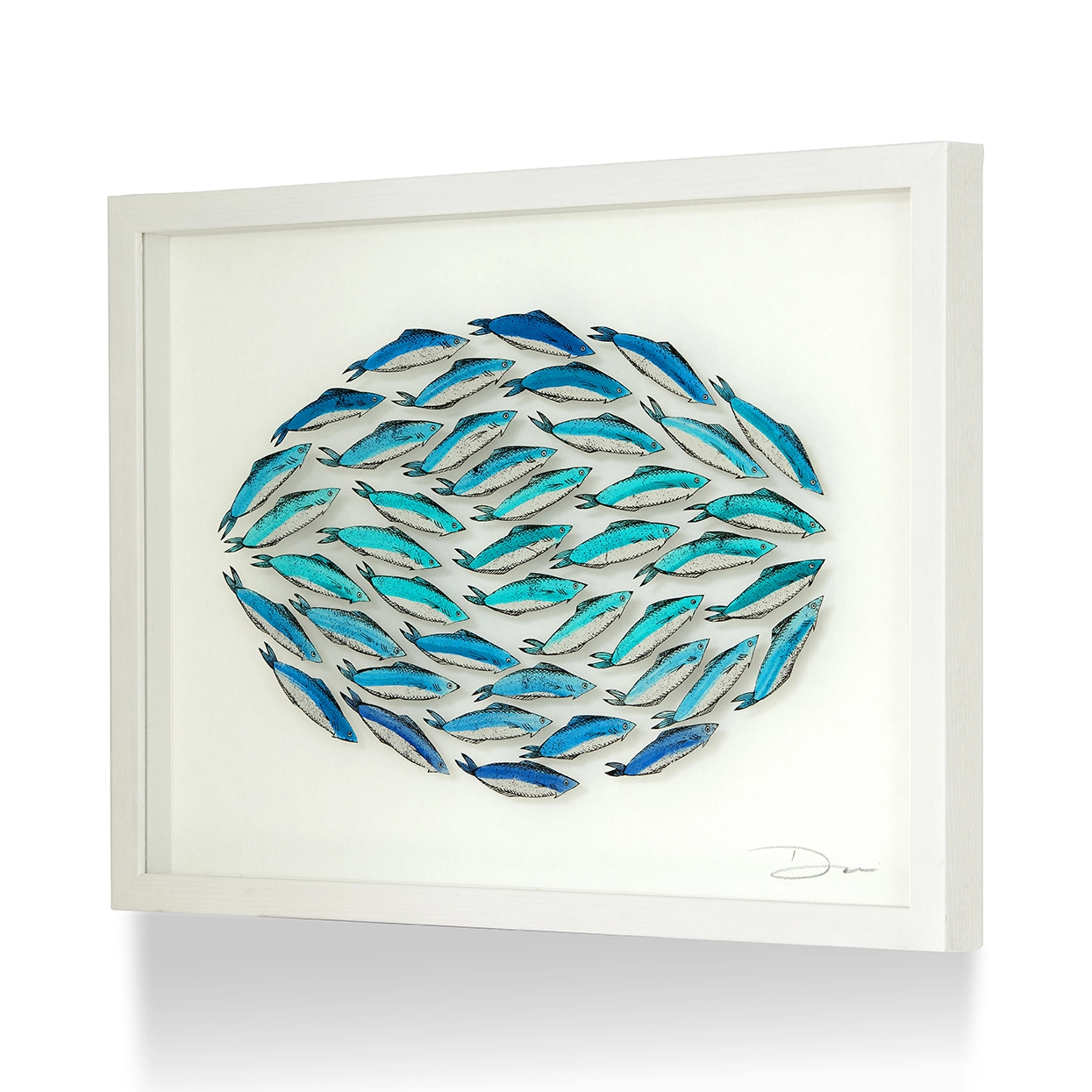
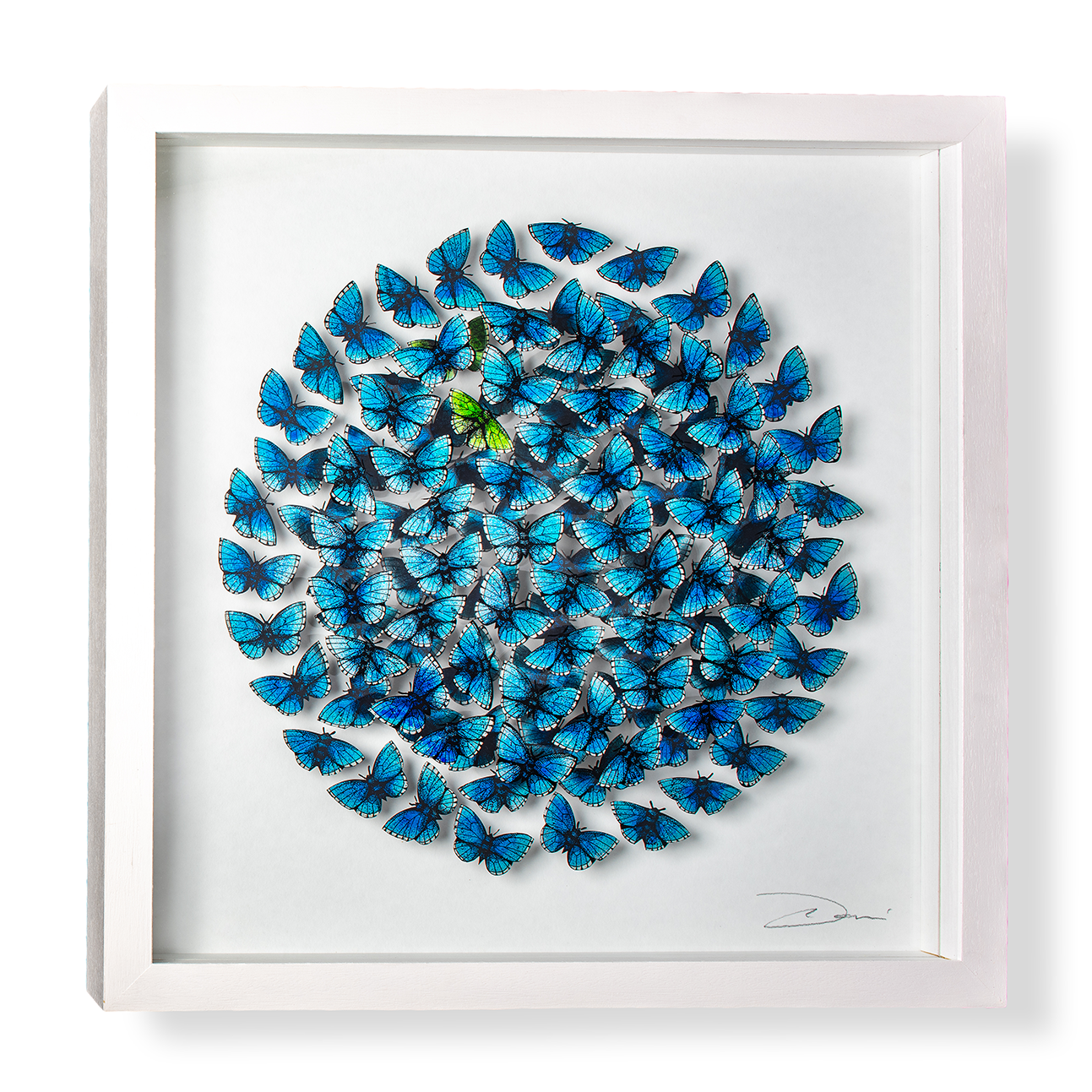
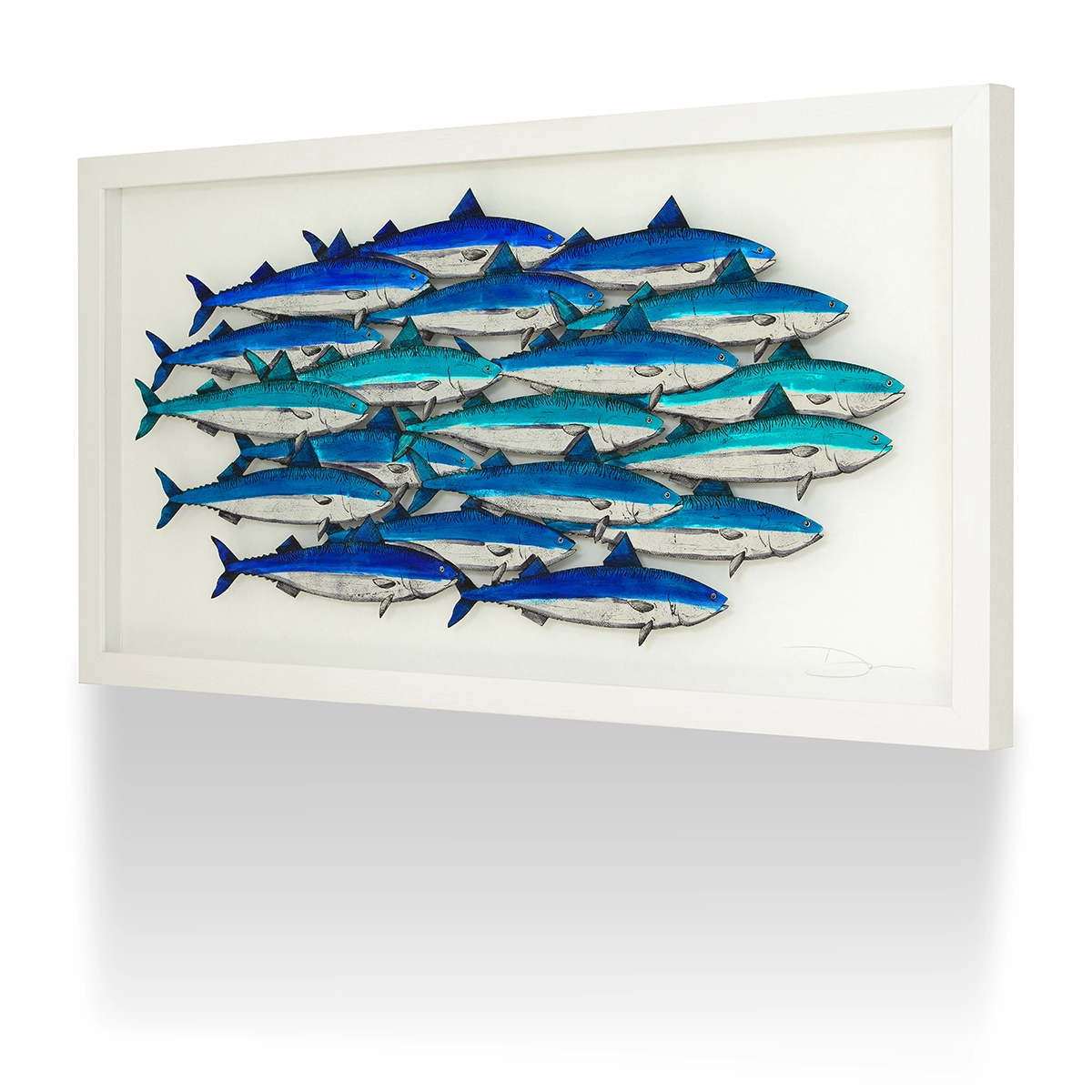
Danni specialises in the Ancient Art of Verre-églomisé, the gilding of glass. Each piece of Danni’s work is hand painted onto the reverse of toughened glass with details added in inks, mica dust and lustre, then gilded in Metal leaf, such as 24 Karat Gold, Silver or Copper. Each and every piece is an original & no two pieces are ever identical.
The scarcity of Verre-églomisé in the arts has meant it has been listed by the Heritage Craft Association as ‘Critically endangered’, placing it on the ‘Red list of crafts’ that are likely to become lost art forms. By combining this rare art with her own fine art practice, Danni has set a benchmark in the use of Verre-églomisé, with the creation of her innovative, distinctive, unique, and contemporary pieces.
Danni has numerous works held in private collections in the U.K, United States, Saudi Arabia, France, Belgium, Spain, Germany, The Netherlands, Switzerland, Singapore & Kenya.
She is proud to be a multi award winning artist, with awards including;
‘Winner -Wildlife Artist of the Year 2023/24’ Global Awards.
‘Winner – Wildlife Artist of the Year 2023’ Lux life Magazine.
‘Finalist – Wildlife Artist of the year 2023’ David Shepherd Wildlife Foundation prize.
‘Winner – South West Contemporary Artist of the Year 2022’
‘Winner – Contemporary Natural World Artist of the year 2021’ in the British Made Awards.
‘Highly commended finalist – ‘Wildlife artist of the Year awards 2021’ David Shepherd Wildlife Foundation prize.
Danni works from her Studio close to the coast in the beautiful county of North Devon, England, a stones throw from the stunning Exmoor national park and her favourite surf break, Saunton Sands.
History of Verre – églomisé
Verre-eglomise originates from the pre Roman period, but was notably revived in the 18th Century by French interior decorator Jean Baptiste Glomy.The elaborate technique demands experience, crucial precision and attention to a multitude of environmental variables. The gilder must create static to lift, position and float each delicate leaf of pressed metal onto the glass, above a minute layer of purified water and gelatine, or oil.
Water gilding and Oil gilding both produce different effects, and can be be carefully mixed within a piece to create subtle changes to the reflective texture. Although processes can be repeated, effects can never be completely replicated. The final outcome will always be unique to that individual piece.
Showing all 7 results

New in

Sold

Sold

Just Arrived
Sold